If you’ve spent any time browsing the tea aisle at the grocery store, you’ve probably noticed something interesting. Right next to the black teas and green teas are boxes labeled “herbal tea.”
- Chamomile tea
- Peppermint tea
- Rooibos Tea
But here’s the little secret many people don’t realize: Most herbal teas aren’t technically tea at all. They’re something called tisanes Don’t worry — that doesn’t make them any less delicious or beneficial. But it’s fun to understand the difference, especially if you’re becoming a true tea enthusiast. Let’s explore the truth about herbal tea.
What Makes “Real Tea” Real?
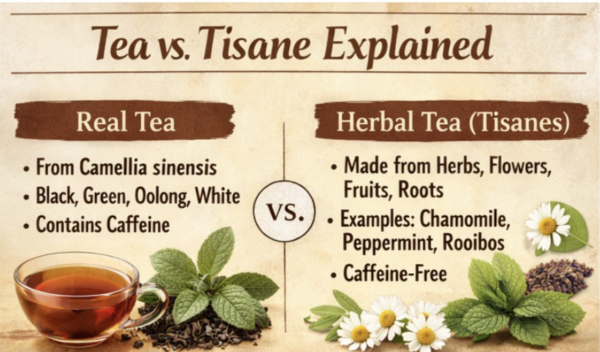
True tea comes from a single plant: Camellia sinensis: Every traditional tea you know comes from this one plant, including:
- Black tea
- Green tea
- White tea
- Oolong tea
- Pu-erh tea
The difference between these teas isn’t the plant — it’s how the leaves are processed.
- Green Tea – Minimal oxidation
- Black Tea – Fully oxidized
- Oolong Tea – Partially oxidized
- White Tea – Lightly processed
So if a drink is made from Camellia sinensis leaves, it’s officially real tea.
What Is Herbal Tea Then?
Herbal teas are actually plant infusions made from herbs, flowers, spices, roots, or fruits. The proper name is tisane (pronounced tee-zahn). Unlike real tea, tisanes can be made from almost any plant material.
Popular examples include:
- Chamomile (flowers)
- Peppermint (leaves)
- Hibiscus (flowers)
- Rooibos (South African shrub)
- Ginger (root)
They’re brewed the same way as tea, which is why we commonly call them herbal tea. But botanically speaking, they’re not tea at all.
The Caffeine Difference
One big reason many people love herbal teas is they’re naturally caffeine-free.
- Black Tea – Medium caffeine
- Green Tea – Low to medium caffeine
- Oolong Tea – Medium caffeine
- White Tea – Low caffeine
- Herbal Tea (Tisanes) – No caffeine
That makes herbal tea a wonderful choice for:
- Evening relaxation
- Bedtime routines
- People sensitive to caffeine
Chamomile and peppermint are especially popular nighttime favorites.
When Should You Choose Real Tea vs Herbal Tea?
Choose Real Tea When You Want:
- gentle caffeine boost
- Rich traditional tea flavors
- A morning or afternoon pick-me-up
- The classic tea experience
Choose Herbal Tea When You Want:
- A caffeine-free drink
- Relaxation before bed
- Herbal wellness benefits
- A soothing evening ritual
Some Fun Herbal Tea Favorites
- Chamomile – Soft, floral, and relaxing.
- Peppermint – Bright and refreshing.
- Rooibos – Naturally sweet and nutty.
- Hibiscus – Tart and vibrant red.
A Simple Way to Remember
All real tea comes from Camellia sinensis. Anything else is a tisane.
Final Sip
Whether you’re drinking traditional tea or a soothing herbal blend, the ritual of making a cup and taking a quiet moment for yourself is what really matters.
Key Takeaway
Real tea comes from the Camellia sinensis plant, while herbal teas are technically tisanes made from herbs, flowers, fruits, and roots.
Comments
I enjoy getting comments and questions from site visitors, you can leave yours here. – Shirley
This post reminded me of my former boss, who was Chinese and very intentional about what her kids drank. Instead of giving them commercial juices, she would prepare herbal teas herself and serve them ice cold as their afternoon snack. She believed it was a healthier choice, and I admired the care she put into making those tisanes at home.
Reading your explanation of the difference between real tea and herbal infusions makes me appreciate even more how traditions like hers highlight the wellness benefits of herbal blends beyond just taste
Thanks Alexa for reading my post and your comments. I truly believe that many herbs are good for our health. I drink a lot of herbal tea (Tumeric, Ginger, Pepperpent, Nettle, Dandelion, and more). Thanks again – Shirley