

Tea isn’t just a drink

Tea isn’t just a drink; it’s a ticket to a world of rich flavors and hidden health treasures. This ancient brew has journeyed from simple sips to becoming a staple in wellness circles worldwide. People aren’t just brewing tea—they’re brewing better lives.
Tea consumption has soared over the past few decades, and it’s not just about tradition anymore. Tea’s popularity surge directly connects to a growing health and wellness interest. Folks all over are embracing tea as their aromatic ally in the pursuit of a healthier lifestyle. It’s fascinating how a warm cup can be a gentle nudge towards better well-being.
So, why all the buzz about tea’s health benefits? Understanding these benefits and how they affect your body is like finding a gem in the wellness mine. Tea offers more than a cozy beverage experience—it’s like a secret weapon in the battle for better health.
Picture this: a drink rich in antioxidants, detoxifying compounds, and subtle energy boosts—all without the jitters of that third cup of coffee. That’s the promise of tea, promising a diverse range of potential health boosts, from protecting heart health to aiding digestion. There’s so much more to tea than just mingling herbs and water.
Exploring the health benefits of tea isn’t just for the dedicated wellness enthusiast or the health-conscious epicurean. It’s for anyone interested in a more vibrant, balanced life. So grab your favorite mug, get comfy, and dive into tea’s health perks—a discovery that might just change the way you sip!
Understanding Health Benefits: What Makes Tea Stand Out?

Tea lovers, have you ever wondered why your favorite brew has become a health sensation? Let’s break it down. It all starts with the powerhouse compounds found in tea—polyphenols, flavonoids, and catechins. These natural goodies can make all the difference. They’re like tiny, unseen allies aiding your body in the quest for better health.
Researchers have spent years unraveling tea’s mysteries, and the evidence keeps piling up. Scientific studies highlight tea’s role in supporting cardiovascular health, boosting metabolism, and even offering some protection against certain types of cancer. Investigating what’s inside the cup of tea makes it easier to appreciate the true value of this age-old beverage.
But it’s not just scientists and researchers singing tea’s praises. Real-life experiences from those who incorporate tea into their daily rituals provide meaningful insights. From wellness enthusiasts to healthcare experts, people report various health improvements. However, let’s keep it real—some folks might experience side effects. It’s important to balance the buzz with a bit of caution, especially for those sensitive to caffeine or with specific health conditions.
For some, tea might be just the detox elixir needed or the calming brew to end a hectic day. Others might find the caffeine content nudges them a little too much. Understanding personal reactions and opting for the right tea type for your body’s needs is key.
Charting the Cream of the Crop: Top Nine Teas and Their Benefits
Ever wonder which teas pack the most health punch? Here’s your go-to guide. I’ve put together an interactive chart ranking the top nine teas by their health benefits—this is where flavor meets function.

Green tea often tops the list, famous for its kaleidoscope of benefits, from boosting brain health to aiding calorie burning. Matcha, its vibrant cousin, takes it a step further with concentrated nutrients. Oolong, with its smooth, rewarding taste, supports metabolic health and heart wellness.
Herbal teas like chamomile and peppermint aren’t just soothing—they have unique properties tailored to various needs. Chamomile helps with sleep and relaxation, while peppermint’s cool punch can soothe digestive woes.
Ever hear of white tea or Pu-erh? These lesser-known teas are climbing the ranks. White tea has a light flavor, perfect for those sensitive to caffeine, and is packed with anti-aging antioxidants. Pu’erh stands out with its earthy notes and potential for promoting weight loss and digestion.
Rooibos offers a caffeine-free option loaded with anti-inflammatory attributes, perfect for evening relaxation without worrying about restless nights. Each tea brings something special—knowing benefits lets you choose what’s right for you.
Don’t miss the infographic showing how these teas stack up. It’s more than pretty visuals—it’s a practical guide to picking your next tea adventure. Serving suggestions are included, helping you unlock each tea’s full health potential.
Testimonials & Reviews: Consumers Share Their Tea Journeys
Curious about how others experience the magic of tea? I’ve gathered stories from folks who found transformation in their teacups. Whether it was better digestion or a calmer mind, these personal journeys highlight tea’s potential to improve health and wellbeing.
Take Jessie, a longtime coffee drinker turned tea enthusiast. After switching to green tea, Jessie noticed improved focus during the workday without the caffeine crash. Her testimonial sheds light on how even small changes, like choosing tea over coffee, can lead to significant benefits.
Lisa, a new mom balancing sleepless nights, swears by chamomile for its soothing, natural sleep-inducing properties. For her, those calming herbs have become a staple in getting through the early parenting months with some sanity intact.
Healthcare professionals and nutritionists also weigh in with curated reviews. Dr. Nguyen, a nutritionist, highlights oolong tea’s unique amino acids, which she suggests play a role in mood regulation and relaxation. Her clinical insights add a layer of trust and expertise to our understanding.
Taste, accessibility, and health impacts are rated across these tea types, with quotes right from the mouths of those who savor them daily.
Curious about flavor profiles or potential benefits? These reviews create a rounded picture, helping you choose a brew that aligns with your preferences and health goals.
Making Informed Choices: How to Integrate Tea into Your Lifestyle
Ready to make tea a part of your life? It’s all about picking the right brew for your personal health goals. Whether you’re targeting better digestion, more energy, or just a moment of calm, there’s a tea out there waving its leafy hand, ready to help.

Start by exploring different types—maybe try a sampler to see what resonates with your taste buds and wellness intentions. If you’re looking to reduce your caffeine intake, opt for herbal teas, like rooibos or chamomile, which offer health perks without the buzz.
Consider incorporating tea into your daily routine, and not just as a drink. Think infusions in your morning oatmeal or a calming cup before bed. Even cooking with tea can add a unique flavor twist and an extra health kick to your favorite recipes.
When selecting tea, remember the importance of sustainability and fair trade. Supporting brands that source responsibly ensures you’re contributing positively to the environment and the communities behind your favorite brew.
Lastly, get some pro tips from tea experts. They can guide you in exploring brewing techniques, pairing suggestions, and finding trusted sources. Embrace the journey—tea isn’t just a drink; it’s a way to nourish your body and soul.
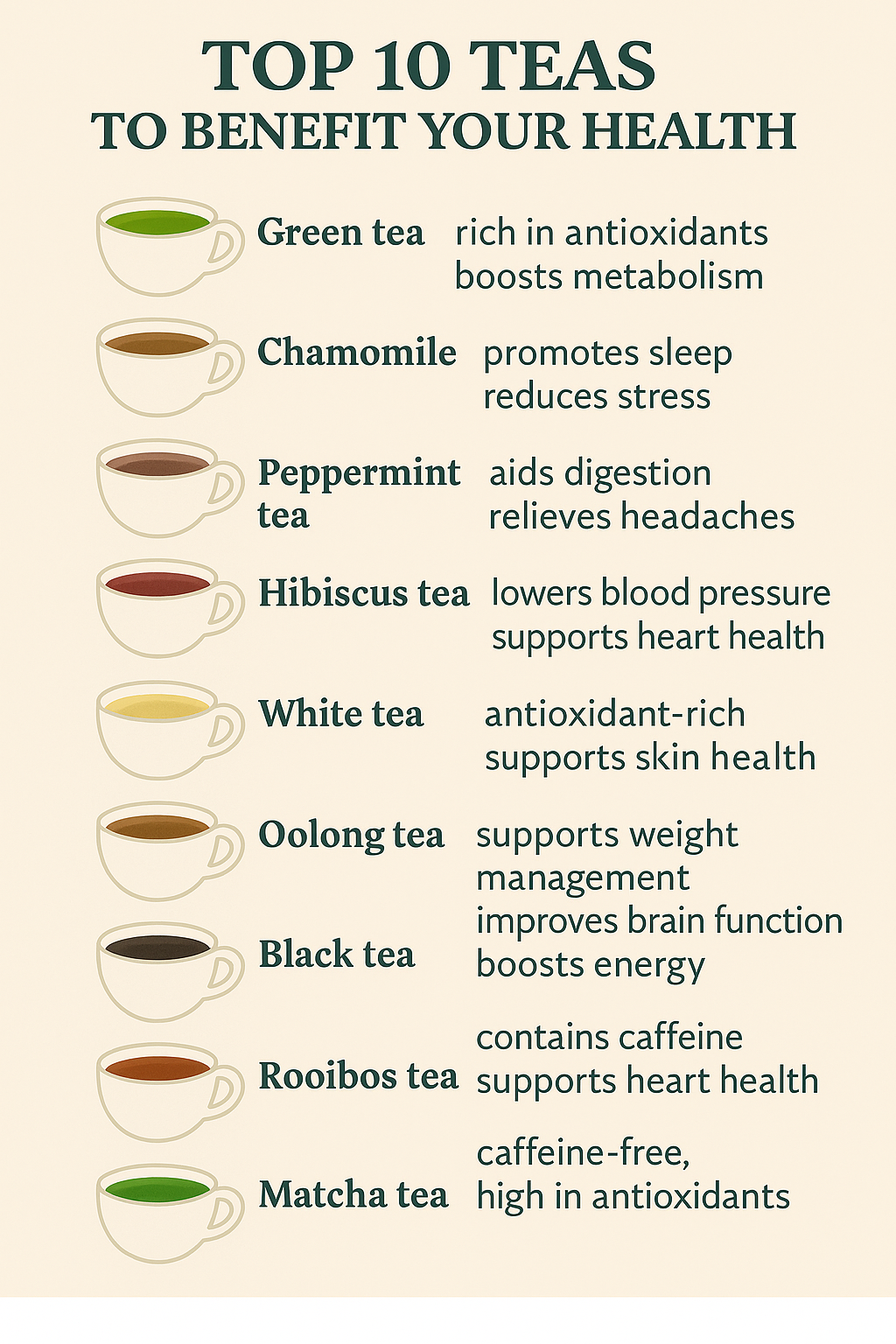
Top 10 Chart
I was curious about what some of the top, healthy teas are and what they might help. Heres a chart you may find interesting:
Links to purchase teas on the chart
Here are some links to purchase some of these type teas. I purchase from Amazon a lot. These links are to organic teas, bagged or looseleaf:
- Geen Teas
- Chamomile Teas
- Peppermint Teas
- Ginger Teas
- Hibiscus Teas
- White Teas
- Oolong Teas
- Black Teas
- Rooibos Teas
- Matcha Teas
Affiliates Links
This post may contain affiliate links, which, if clicked on and an item purchased, I receive a commission – Shirley